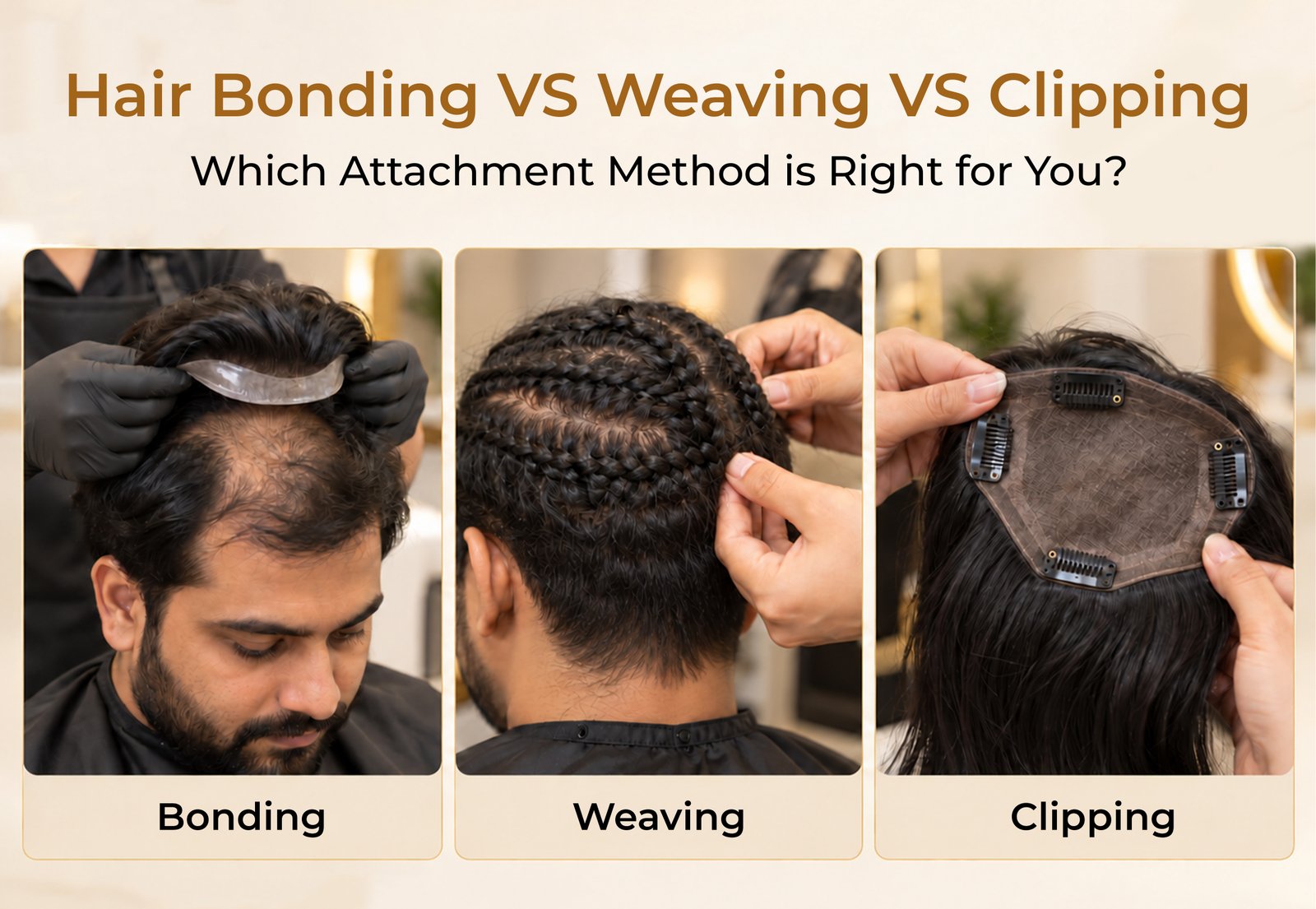
When you decide to get a hair patch, you quickly discover that "getting a hair patch" is only half the decision. The other half — and arguably the more important half for daily life — is how the patch is attached to your head.
The attachment method determines how secure your patch feels during exercise, how long it stays in place, how you maintain it at home, how often you need to visit the studio, and how your scalp feels day to day. Choose the wrong method for your lifestyle and you will be back in the studio far more frequently than necessary, or uncomfortable during the activities you care most about.
At Wig Boutique in Rohini, we have been fitting hair systems using all attachment methods for over 20 years — bonding, weaving, clipping, taping, and integration. This guide explains each method honestly, who it is best suited for, and what the real day-to-day experience is like.
The Four Main Attachment Methods — Overview
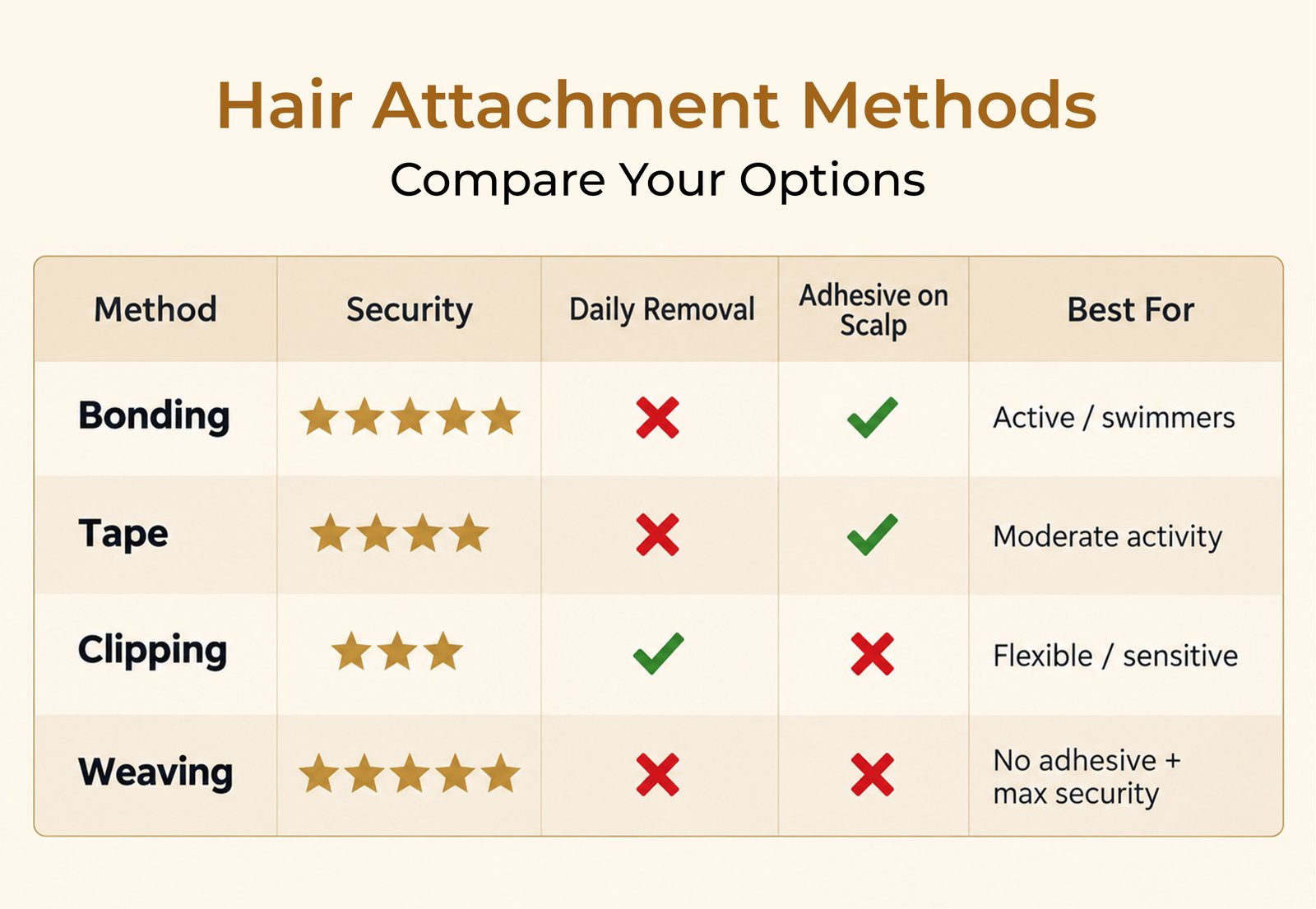
Before going into detail, here is the quick picture:
| Method | How It Works | Security Level | Best For | Maintenance |
|---|---|---|---|---|
| Bonding (adhesive) | Medical-grade glue attaches base to scalp | Very high | Active lifestyle, sports, swimming | Studio every 2–6 weeks |
| Tape | Double-sided medical tape attaches base to scalp | High | Moderate activity, those who prefer tape over glue | Studio every 2–4 weeks |
| Clipping | Small clips sewn into base attach to surrounding hair | Moderate–High | Those who remove daily, sensitive scalp, alopecia, postpartum | Home removal, studio every 6–8 weeks |
| Weaving/Integration | System woven into surrounding natural hair using thread | Very high | Those who want no adhesive on scalp, long-term wear | Studio every 4–6 weeks |
Now the full picture for each.
Method 1 — Hair Bonding (Adhesive)
What It Is
Hair bonding uses a medical-grade skin-safe adhesive — sometimes called "hair glue" or "scalp bonding adhesive" — applied to the perimeter of the hair system base and then pressed firmly to the scalp. When properly applied and cured, the bond is extremely secure.
Hair bonding is a non-surgical solution where a hair patch is attached to the scalp using skin-friendly glue, providing a natural look.
There are two main adhesive types used for hair bonding:
Water-based adhesive — lighter hold, easier to clean off. Best for moderate activity levels. Typically lasts 1–3 weeks before re-application is needed.
Solvent-based adhesive — stronger, longer-lasting hold. Best for very active clients — heavy gym, swimming daily, outdoor physical work. Typically lasts 3–6 weeks. Requires a specific solvent for removal — do not attempt to pull off a solvent-bonded system without the correct remover.
Who It Is Best For
- Swimmers and daily gym users — bonding provides the most secure attachment for water exposure and high sweat activity
- Men with outdoor or physical jobs — construction, driving long distances, field work — where the patch needs to stay fixed through a full working day without any attention
- Those who want the most "forget about it" experience — once bonded, you do not need to think about it until the re-bonding visit
The Real Day-to-Day Experience
After bonding at Wig Boutique, most clients go home and essentially forget they are wearing a hair system. They shower normally, sleep on any side, exercise, and go about their day without any concern about movement or shifting.
What bonding clients do experience:
- A mild tugging sensation if the bond is due for renewal — the early signal that a re-bonding visit is coming
- Mild scalp irritation in some clients with very sensitive skin — usually resolves with a different adhesive formulation
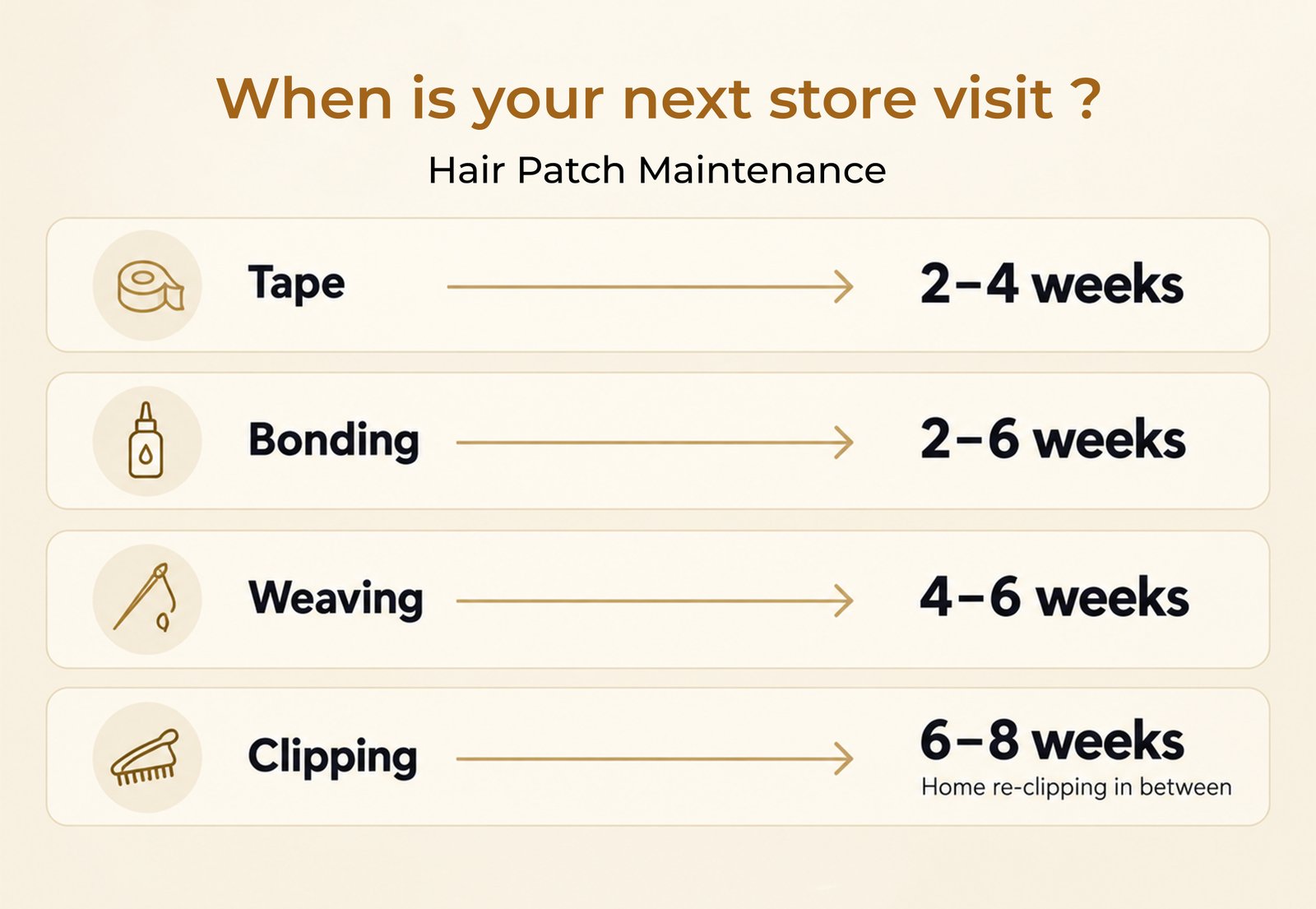
- The need to visit Wig Boutique every 2–6 weeks for professional removal, cleaning, and re-bonding
What Bonding Clients Need to Know
Never pull off a bonded hair system yourself. Removing a bonded system requires a specific adhesive solvent to dissolve the bond cleanly. Pulling without solvent risks damaging both the base and the scalp skin. All removal is done professionally at Wig Boutique.
Scalp cleaning matters. At each re-bonding visit, our team cleans residual adhesive from the scalp completely before applying fresh adhesive. This prevents buildup and maintains scalp health.
Bonding is not suitable for everyone. Clients with very sensitive or reactive skin, those with scalp conditions like psoriasis or eczema in the attachment area, and those who are postpartum (where gentle attachment is preferable) are generally better suited to clipping or tape.
Method 2 — Double-Sided Medical Tape
What It Is
Medical-grade double-sided tape is applied to the perimeter of the hair system base, then the base is pressed to the scalp. The tape bonds to clean, oil-free scalp skin and holds the system securely.
Who It Is Best For
- Those who want bonding-level security with easier home management — some clients with experience can re-tape at home between full studio visits, which is not typically possible with adhesive bonding
- Those who prefer tape to glue — personal preference is a valid reason; some clients simply find tape more comfortable or familiar
- Moderate activity levels — swimming and high-sweat activity loosen tape faster than bonding adhesive
Real Day-to-Day Experience
Tape systems feel similar to bonded systems in daily wear. The hold is slightly less resilient to sustained water exposure than adhesive bonding — heavy daily swimmers typically find adhesive performs better long-term.
Tape visits at Wig Boutique are typically every 2–4 weeks. Old tape is removed cleanly, the base is cleaned, and fresh tape is applied.
Method 3 — Clipping
What It Is
Small metal or plastic clips are sewn into the perimeter or interior of the hair system base. These clips attach by snapping onto the surrounding natural hair — like a hair clip, but designed specifically for hair system attachment.
Unlike bonded systems, clipping lets clients open and close the clips at home, making the system fully removable without any adhesive or solvent.
Who It Is Best For
- Those who want to remove the system daily — for sleeping, or simply for personal preference
- Alopecia clients — clips attach to surrounding natural hair and do not contact the bald scalp, which may be sensitive
- Postpartum clients — clips are gentle on fragile regrowing hair and are easy to adjust as hair density changes
- Those who are new to hair systems — the removability of clips removes the "commitment anxiety" that some first-time clients feel about bonded systems
- Anyone with scalp sensitivity — no adhesive contacts the scalp at any point
The Real Day-to-Day Experience
Clip systems require a brief daily routine — opening the clips, repositioning the system if needed, and re-clipping. Most clients complete this in 2–3 minutes once they are familiar with the process.
The trade-off for this flexibility: clips provide slightly less security than bonding or tape in very high-activity situations. A client who swims daily or plays contact sports may find clips shift more than they would like during vigorous activity. For moderate exercise — gym, walking, office work, daily life — clip security is typically excellent.
Studio visits for clip systems are less frequent than for bonded systems — typically every 6–8 weeks for professional cleaning, clip inspection, and adjustment.
Important for clip clients: the clips attach to surrounding natural hair. This means you need sufficient surrounding natural hair for the clips to grip. Clients with extensive or total hair loss need a bonded, taped, or woven system rather than clips.
Method 4 — Weaving / Integration
What It Is
Hair weaving — also called integration or thread weaving — involves threading a fine mono nylon thread through the hair system base and weaving it through sections of the client's surrounding natural hair, creating a very secure attachment without any adhesive or tape.
Hair weaving is one of several non-surgical hair attachment methods — highly secure without adhesive, integrating the system directly with surrounding natural hair.
Who It Is Best For
- Those who want maximum security without adhesive — weaving produces a bond comparable to adhesive bonding in security, but without any glue or tape contacting the scalp
- Those who swim or exercise intensively and prefer no adhesive — weaving holds through swimming, gym, and outdoor activity as reliably as adhesive bonding
- Long-term wear clients — woven systems typically stay attached longer between studio visits than taped systems
- Clients who have experienced scalp reactions to adhesive — weaving is a strong adhesive-free alternative for these clients
The Real Day-to-Day Experience
Woven systems feel the most "natural" to many clients — there is nothing on the scalp itself, and the attachment is through the hair rather than the skin. Movement and security feel similar to bonded systems.
The trade-off: weaving requires the client to have sufficient surrounding natural hair for the weave to attach to — similar to clipping. And woven systems must be professionally removed at Wig Boutique — you cannot remove a woven system at home without potentially tangling or damaging your natural hair.
Studio visits for woven systems are typically every 4–6 weeks. The old weave is removed, the base and natural hair are cleaned, and a new weave is applied.
How to Choose — The Right Attachment for Your Life
Rather than a universal recommendation, the right attachment method is the one that fits your specific life. Here is how we help clients choose at Wig Boutique:
- If you swim daily or exercise intensively: Bonding adhesive (solvent-based) or weaving. Both provide maximum security through sustained water and sweat exposure.
- If you want to remove the system at home: Clipping. The only method designed for regular self-removal without professional assistance.
- If you have a sensitive scalp or skin reactions to adhesive: Clipping (no scalp contact) or weaving (no adhesive, contact through hair only).
- If you are postpartum or have alopecia: Clipping — gentle on fragile hair, easily adjusted as hair loss pattern changes, no adhesive.
- If you want the simplest routine — apply and forget: Bonding adhesive. Maximum security, minimum daily thought, professional removal and re-bonding every few weeks.
- If you are new to hair systems and uncertain about commitment: Clipping first. The removability reduces anxiety and lets you experience wearing a hair system before committing to adhesive.
- If you want no adhesive but maximum security: Weaving. The best of both — no glue, extremely secure hold.
Can You Switch Between Methods?
Yes — and clients do. It is common for Wig Boutique clients to start with clipping, become confident with the system, and then switch to bonding for a trip, a particularly active period, or simply because they prefer the security. Others switch from bonding to clipping for a postpartum period when their hair needs gentler treatment.
The method is not permanent — it can be changed at any studio visit. What stays consistent is the hair system itself — the base and hair — which can be used with different attachment methods.
Frequently Asked Questions
Is hair bonding safe for the scalp?
Yes — the adhesives used at Wig Boutique are medical-grade, dermatologically tested, and skin-safe. Some clients with very sensitive skin experience mild reactions — in these cases, we switch to tape, clipping, or weaving. At your consultation, we discuss your skin history before recommending any adhesive.
Can I sleep with a bonded hair system?
Yes — bonded systems are designed for continuous wear including sleeping. Using a silk or satin pillowcase reduces friction on the hair and extends the bond. Clip systems can be worn while sleeping or removed, depending on client preference.
How do I know when my bond needs renewal?
A mild tugging sensation when moving your head, or visible lifting at the edges of the base, are the primary signals. Most clients develop a sense of when their bond cycle is due within the first month of wearing a system. Never pull or force a lifting edge — come to Wig Boutique for re-bonding.
Does hair weaving damage natural hair?
No — professional hair weaving at Wig Boutique uses a fine mono nylon thread that does not cut or damage the natural hair it attaches to. The weave is removed professionally at each visit without damage.
Which method lasts longest between visits?
Solvent-based bonding adhesive and professional weaving both typically last 4–6 weeks. Water-based adhesive and tape typically last 2–4 weeks. Clipping — because it is designed for home removal — can technically be worn continuously for 6–8 weeks with home re-clipping, with a full professional cleaning visit at 6–8 weeks.
Book a Consultation — We Will Recommend the Right Method for You
At Wig Boutique, the attachment method recommendation happens at your consultation — based on your activity level, scalp type, preference for home management, and lifestyle. We will not push you toward any particular method for our convenience. The right method is the one that works for your life.
Address: D-12/183, Sai Baba Chowk, 2nd Floor, Sector 8, Rohini, New Delhi – 110085
Near Rohini East Metro Station Gate 2 | Opposite Metro Pillar No. 393
Call or WhatsApp: +91 99996 76733
Monday to Saturday | 10:30 AM to 7:30 PM
Written by the Wig Boutique Expert Team — 20+ years of hair bonding, weaving, clipping, and all attachment methods for men and women in Rohini, Delhi. 5,000+ clients fitted. Last reviewed: October 2026.
Individual results vary by scalp type, lifestyle, and activity level. A consultation at Wig Boutique determines the most appropriate attachment method for your specific situation.