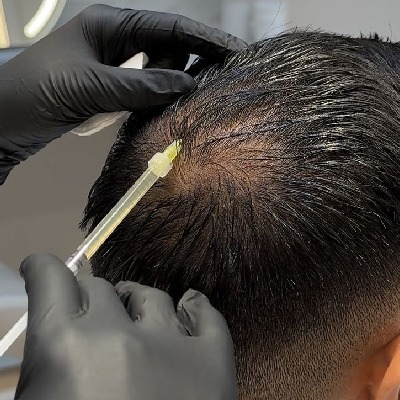
Hair loss in women is significantly more common than most people realise — and significantly under-discussed. Approximately 2.3 billion people worldwide are affected by some form of hair loss — women represent a large and growing proportion of that number, dealing with thinning from causes as varied as hormonal changes, postpartum shedding, PCOD, alopecia, chemotherapy, stress, and genetics.
The search for a solution is often complicated by the fact that most hair loss content — and most hair patch studios in Delhi — is written and designed for men. Wig Boutique in Rohini has been serving women with non-surgical hair replacement for 15+ years. This article is specifically for women who want to understand their options, what a hair system looks like in practice, and how to take the first step.
Why Female Hair Loss Is Different — and Why the Solutions Must Be Too
Male pattern baldness follows a predictable pattern — receding hairline, crown thinning, eventual baldness across the top. Female hair loss is far more varied and often far less visible at first:
Common causes of hair loss in women include alopecia areata, ageing, genetics, and menopause as well as:
PCOD/PCOS (Polycystic Ovarian Disease/Syndrome). Elevated androgens in PCOD cause hair follicles to miniaturise, leading to diffuse thinning — hair gets thinner all over the scalp rather than falling in patches. This is one of the most common causes of hair loss in women aged 20–40 in Delhi.
Postpartum hair loss. During pregnancy, elevated oestrogen prolongs the growth phase of hair — resulting in fuller, thicker hair. After delivery, oestrogen levels drop sharply, and large amounts of hair enter the shedding phase simultaneously. This typically begins 3–6 months after delivery and can be alarming in its volume.
Alopecia areata. An autoimmune condition where the immune system attacks hair follicles, causing smooth, circular bald patches. Can occur on the scalp, eyebrows, or eyelashes. Unpredictable in pattern.
Chemotherapy-related hair loss. Chemotherapy targets rapidly dividing cells — including hair follicles. Hair loss typically begins 2–4 weeks after starting treatment and can be total or near-total.
Menopausal thinning. Declining oestrogen levels in perimenopause and menopause reduce the thickness and growth rate of hair. The hairline may remain intact while overall density decreases significantly.
Traction alopecia. Repeated tension from tight hairstyles — braids, buns, ponytails pulled very tight over years — damages follicles along the hairline and temples, causing permanent thinning in those areas.
Thyroid-related hair loss. Both hypothyroidism and hyperthyroidism cause diffuse hair shedding across the scalp.
Why do solutions designed for men not work for women? The pattern is different. A hair system for a man typically needs to cover the crown or top of the scalp while leaving the sides intact. A women's hair solution needs to address diffuse thinning, crown density loss, a receding parting, or a specific bald patch — while blending with existing hair all around, including the sides and back, which remain present.
The fitting techniques, base design, attachment methods, and styling considerations are different. A studio with experience fitting only men's systems will not produce the same quality of result for a female client.
What Is a Hair Patch for Women — and How Is It Different From a Wig?
This is one of the most common questions at Wig Boutique consultations.
A wig covers the entire scalp. It is designed for women with total or near-total hair loss — from chemotherapy, severe alopecia, or advanced genetic hair loss. A full wig is worn over the scalp and sits on the head using clips, tape, or an adjustable band.
A hair patch (hair system or topper) is a partial unit that covers a specific area of thinning or baldness — the crown, the parting, the temples — while the woman's own hair continues to grow naturally around it. The patch is attached to the existing hair using clips, tape, or bonding. When blended correctly, it is genuinely undetectable.
A hair topper is a common form of partial hair system specifically designed for women with crown or parting area thinning. It sits at the top of the head and blends with the existing hair at the sides and back.
At Wig Boutique, we fit all three types — full wigs, partial hair patches, and hair toppers — for women depending on the extent and pattern of their hair loss. The right solution is determined at consultation, not before.
The Wig Boutique Approach for Women — What Makes It Different
A quality hair patch system is designed to complement the hair colour, texture, and density of the client. For women, this requires additional nuance:
Private consultation. Every new female client at Wig Boutique is seen in a private consultation room. Hair loss in women carries a different emotional weight than in men — the consultation environment reflects that. There are no open salon chairs. There is no rushing.
Human hair. Every system we fit uses ethically sourced human hair. For women, this matters even more than for men — because the system must blend with the texture, wave pattern, and colour of the client's own natural hair all around it. Synthetic hair cannot match this with the precision that human hair achieves.
Texture and colour matching. Women's hair loss often leaves substantial existing hair around the thinning area. The hair in the system must match the existing hair's texture (straight, wavy, curly), volume, and colour precisely — including colour gradations and highlights where present.
Specialist experience with specific causes. A studio that has never fitted a system for a postpartum client is not prepared for the emotional context, the timeline considerations, or the fact that some postpartum shedding continues during the months the system is worn. At Wig Boutique, we have served postpartum clients, chemotherapy patients, alopecia clients, and menopausal clients across 15+ years.
Solutions for Each Type of Female Hair Loss
PCOD-Related Diffuse Thinning
Diffuse thinning from PCOD affects the entire scalp surface — density reduces gradually rather than falling in a defined pattern. The most appropriate hair solution is a topper or integration system that adds density to the existing hair across the crown and parting, without full scalp coverage.
The key fitting consideration: as PCOD is hormonal and ongoing, the thinning pattern may continue to change over time. The system should be designed for easy adjustment as hair density changes.
Postpartum Hair Loss
Postpartum shedding is temporary in most cases — the hair follicles are not damaged, and regrowth typically resumes 6–12 months after delivery. But during that shedding phase, hair loss can be significant enough to create visible thinning, particularly along the hairline and parting.
For postpartum clients, Wig Boutique often recommends a hair topper or partial integration system specifically designed to be removable and adjustable — because the underlying hair is regrowing during this period. The system provides coverage and confidence during recovery.
What we do not recommend: an aggressive attachment method that could stress existing postpartum hair, which is already in a fragile phase.
Alopecia Areata
Alopecia areata creates smooth, defined bald patches — circular or irregular — that can appear anywhere on the scalp. A custom partial patch fitted over the specific bald area is often the most targeted solution, covering the patch while leaving surrounding hair completely free.
For clients with extensive alopecia (multiple large patches or totalis — complete scalp hair loss), a full custom wig is more appropriate. A common health problem causing bald spots in women is alopecia areata — earlier it was believed that hair patches were only for men, but hair patches are for both men and women.
Chemotherapy Hair Loss
Cancer-related hair loss typically occurs rapidly — within weeks of starting treatment. For clients undergoing chemotherapy in Delhi, timing the consultation and fitting is important: some prefer to come in before hair loss begins to allow texture and colour matching against existing hair; others prefer to wait until hair loss is stable.
At Wig Boutique, chemotherapy clients receive a dedicated, fully private consultation. We use soft, lightweight bases appropriate for scalp sensitivity during treatment. All products used are hypoallergenic. We are experienced in the emotional context of this type of consultation and take the time it requires.
Menopausal Thinning
Menopausal hair thinning reduces overall density — the scalp becomes more visible through the hair, particularly under direct light. Hair toppers and partial integration systems add volume and density without full scalp coverage. Because menopausal thinning progresses gradually, the system can be adjusted as needed over time.
Maintenance for Women's Hair Systems — What to Expect
Women's hair systems require the same maintenance as men's — but with additional considerations around styling versatility. Most of our female clients use their system with the same styling routine as their natural hair: blow-drying, straightening, curling, and tying up.
Weekly at home:
- Gentle washing with specialist shampoo and conditioner
- Air-dry or low-heat styling
- Brush gently from ends to roots to avoid base stress
Every 2–6 weeks at Wig Boutique:
- Professional re-attachment using the most appropriate method for your base and lifestyle
- Cleaning and inspection of the base for any wear or lifting
- Colour maintenance and trimming as needed
Every 6–18 months:
- System replacement — depending on base material, frequency of wear, and lifestyle
One specific consideration for women: if you swim frequently, exercise at high intensity, or wear your hair in tight styles, the attachment method and base material should be chosen accordingly at consultation. Not every attachment method is equally suited to every lifestyle.
Frequently Asked Questions from Female Clients
Q: Can a hair patch for women be styled like natural hair? Yes — at Wig Boutique, every women's system uses 100% human hair, which can be washed, blow-dried, straightened, curled, and styled exactly like natural hair. You can tie it up, part it differently, and have it cut by your regular hairdresser. The only styling restriction is excessive heat directly on the base material — the hair itself handles heat normally.
Q: Will anyone be able to tell I am wearing a hair system? When properly fitted and matched by an experienced specialist, a women's hair system is genuinely undetectable in normal social situations, photographs, and close personal interactions. The quality of the match and fitting technique are the determining factors — both are Wig Boutique's core expertise across 15+ years of fittings.
Q: Is a hair system a good option during chemotherapy? Yes — for most clients undergoing chemotherapy, a custom hair system is the most immediate and emotionally supportive option available. At Wig Boutique, chemotherapy clients receive private consultations, hypoallergenic materials, and fittings timed appropriately around their treatment schedule.
Q: How long does postpartum hair loss last — should I wait before getting a hair system? Postpartum shedding typically peaks at 3–6 months after delivery and resolves by 12 months as the hair regrowth cycle normalises. A hair system during this period provides coverage and confidence while regrowth occurs. For postpartum clients, we recommend a removable, clip-based attachment method that does not stress the regrowing hair — and a system designed to be adjusted as natural hair density increases.
Q: Is the consultation private? Yes — entirely. Wig Boutique in Rohini conducts all female client consultations in a private room. There are no open chairs, no other clients present. The consultation takes as long as it needs to.
Book a Private Consultation at Wig Boutique, Rohini
If you are experiencing any form of hair loss — whether from PCOD, postpartum, alopecia, chemotherapy, menopause, or thinning that has no clear diagnosis yet — a private consultation at Wig Boutique is the starting point.
We will look at your specific hair loss pattern, your existing hair texture and colour, your lifestyle, and what solution would produce the most natural result. There is no obligation at the consultation. You will leave knowing what the options are and what to expect from each.
We have been doing this for 15+ years in Rohini, for 5,000+ clients across Northwest Delhi. If you would like to see what a properly fitted, 100% human hair system looks like on you — this week is a good time to start.
📍 D-12/183, Sai Baba Chowk, 2nd Floor, Sector 8, Rohini, New Delhi – 110085 Near Rohini East Metro Station | Opposite Metro Pillar No. 393
📞 Call or WhatsApp: +91 99996 76733
→ Hair transplant vs hair patch — honest comparison
→ How to choose the best hair patch studio in Delhi
→ Non-surgical hair replacement
Individual results vary. A private consultation confirms the best solution for your specific hair loss pattern and lifestyle.